
parseInt
The parseInt task parses a string value and returns an integer (number) value using the decimal number system as a mathematical base. Only the first number in the string is returned. If the string argument is not a string, it is converted to a string using the ToString abstract operation. Leading whitespace in the string is ignored.
Potential use case
This task is useful when you need to convert a number represented as a string into an integer. For example, if your data string contains a decimal value such as "1.655", parseInt will convert the decimal value to the rounded number 1, and the digits that follow the decimal will be truncated.
Properties
Example 1
In this example:
- The incoming string variable
stris statically set to0xF, which is a hexadecimal representation. - The
radixnumber is set to16, which is a hexadecimal number.
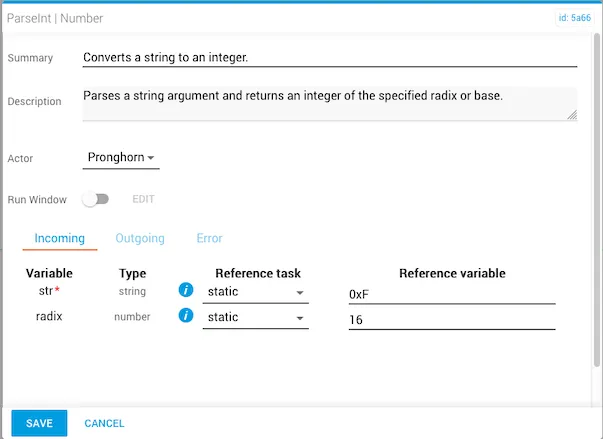
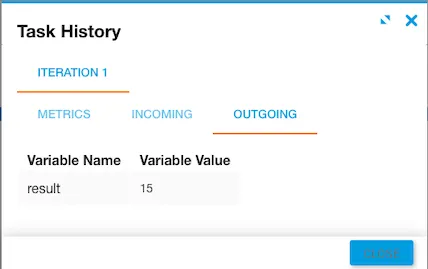
The result of the outgoing variable is 15.
Example 2
In this example:
- The incoming string variable
stris statically set to02019 4 29. Notice the white spaces within the reference variable. - No
radixnumber is provided, so the default decimal value (10) is used.
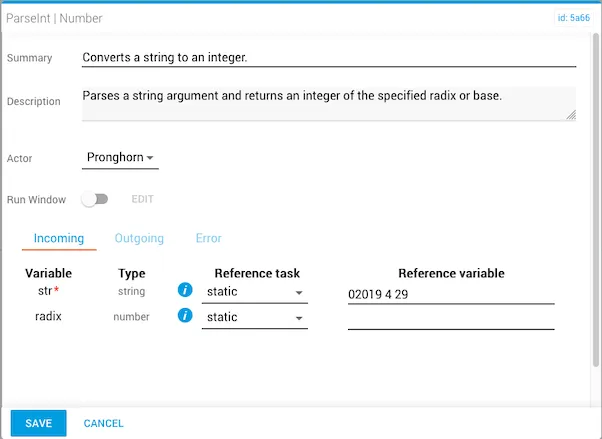
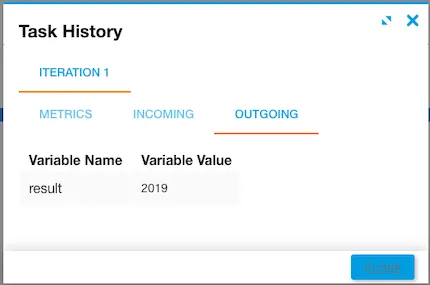
The result of the outgoing variable is 2019.
Example 3
In this example:
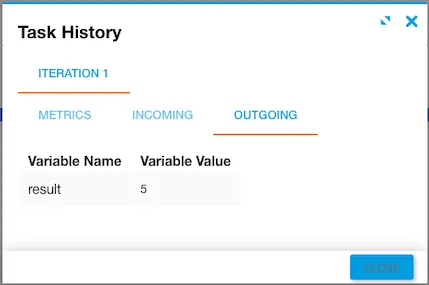
- The incoming string variable
stris statically set to5.99. - No
radixnumber is provided, so the default decimal value (10) is used.
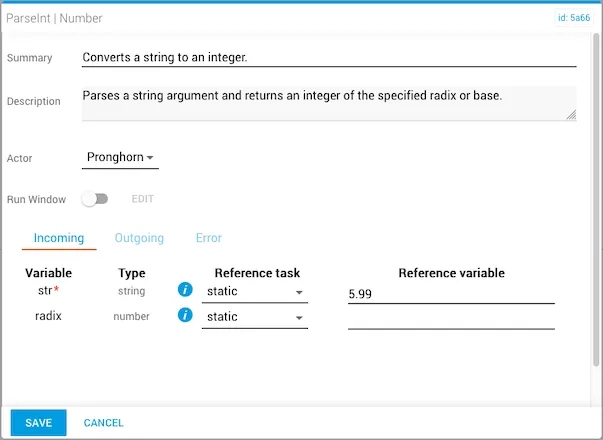
The result of the outgoing variable is 5. The numbers after the decimal are truncated.
Example 4
In this example:
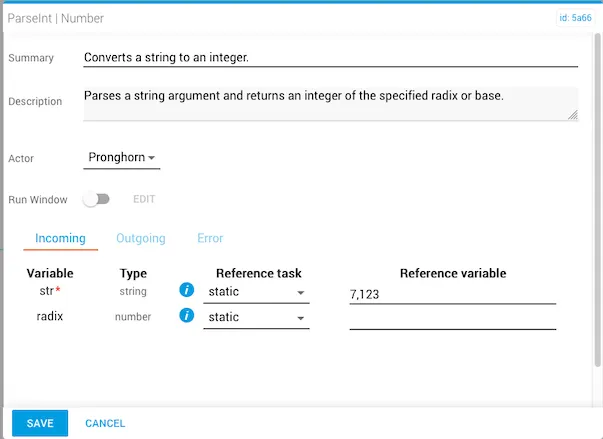
- The incoming string variable
stris statically set to7,123. Notice the value contains a comma. - No
radixnumber is provided, so the default decimal value (10) is used.
The result of the outgoing variable is 7. The numbers after the comma are truncated.
Example 5
In this example:
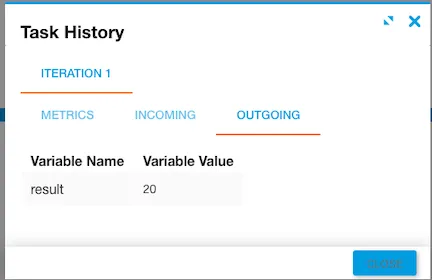
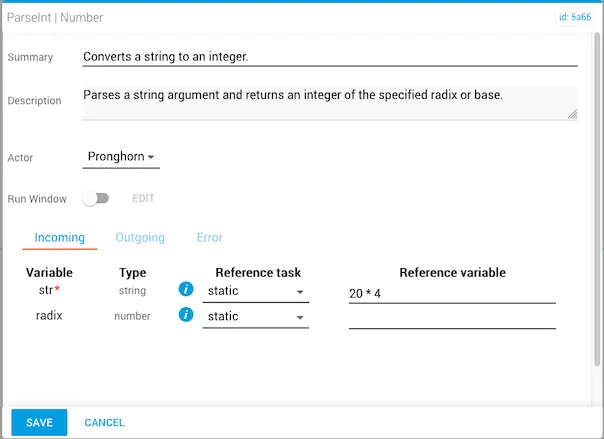
- The incoming string variable
stris set to20*4. Notice the operator (asterisk) within the reference variable. - No
radixnumber is provided, so the default decimal value (10) is used.
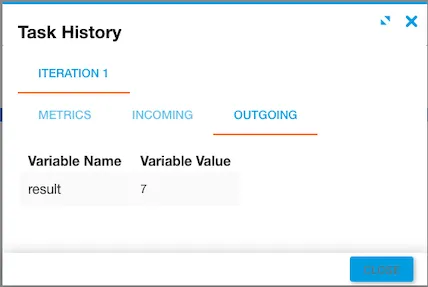
The result of the outgoing variable is 20.